Centro Escolar University
My academic journey began at CEU. I later realized that I needed a different environment in which to grow.
Manila Central University
College of Medicine
A STUDY OF SCIENCE, SERVICE & GROWTH
Stay curious.
Stay humble.
Keep learning.
ABOUT THE STUDENT
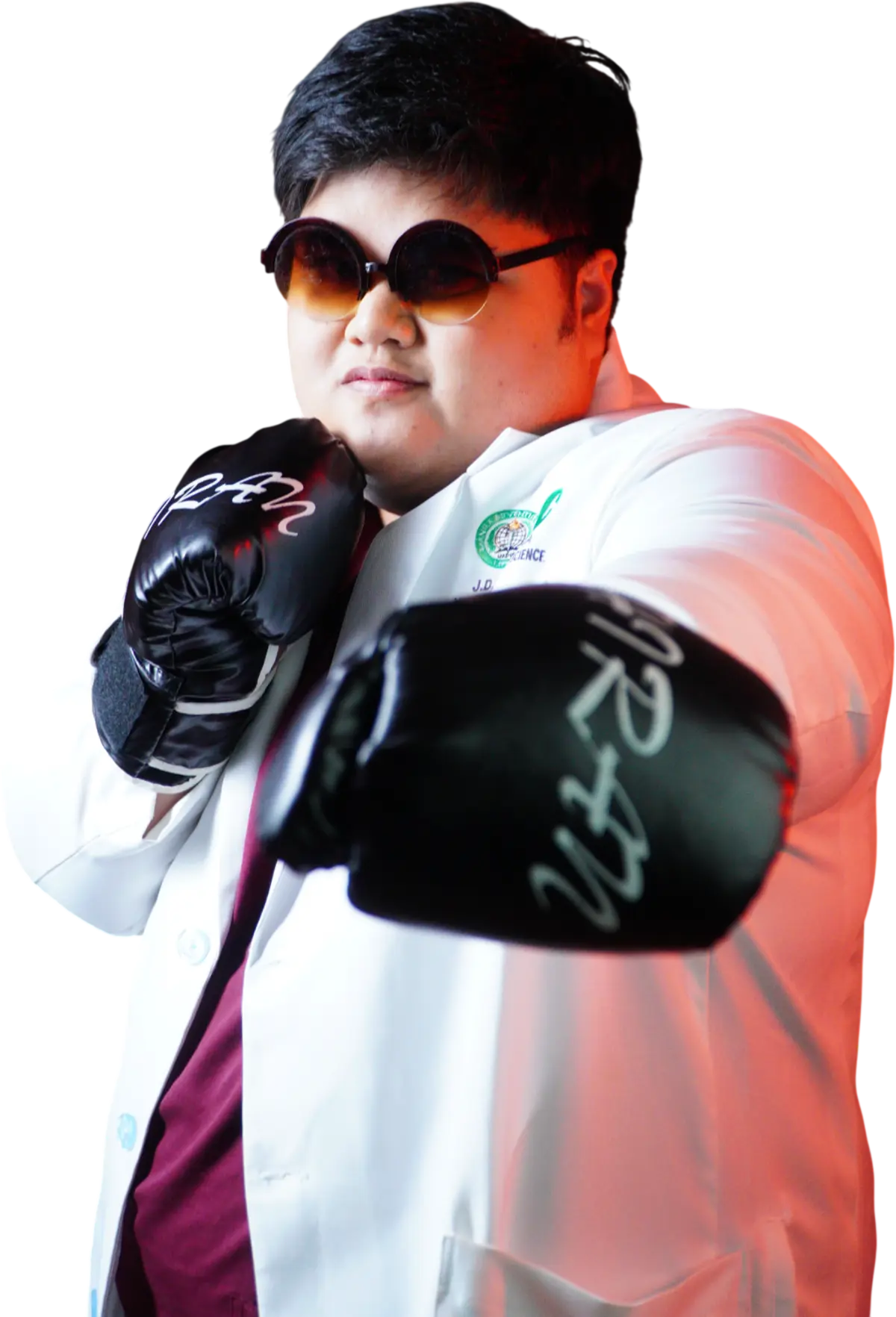
Hi, I am John Derrick DC. Esguerra, RMT, a 26-year-old medical student from Nueva Ecija.
This portfolio is a modest record of my time in medical school. I created it not to present grand achievements, but to document an honest journey through the science of healthcare and the continuing work of serving others well.
My approach to medicine is simple: stay curious, stay humble, and keep learning. I hope these pages will always remind me where I started and show me how far I have come.
EDUCATION & CREDENTIALS
Each change of direction added a new layer to the foundation I now bring to medicine.
My academic journey began at CEU. I later realized that I needed a different environment in which to grow.
I transferred and completed my degree. The decision taught me that changing direction is not the same as giving up.
I earned my professional credential and strengthened my clinical and laboratory foundation.
I completed training in Biosafety, Biosecurity and Biorisk Management.
As a first-year medical student, I am learning to see the patient beyond every laboratory result.
THE NEXT LAP / 2026
One portfolio. Two stages of the learning journey.
Viewing Midterms · 2026
BIOCHEMISTRY PRELIMS
Biochemistry initially felt like an overwhelming exercise in memorizing amino-acid R groups, molecular structures, enzyme kinetics, and regulation. As the lessons progressed, its real value became clearer.
THE PRESSURE
Biochemistry is not simply a basic-science subject to pass. It is the foundational language of human health, disease, and therapeutics. The reactions that once looked disconnected began to reveal how the body works as one system.
THE MUDDIEST POINT
Enzymology became my greatest challenge. There was a point when I nearly gave up and told myself, “Bawi na lang sa midterms.” The kinetics and regulation tested both my patience and confidence.
THE BREAKTHROUGH
With Doc A’s guidance, I found the clarity and support I needed to keep going. I passed both the prelim long examination and the prelim examination. It showed me that difficult material becomes manageable with determination, support, and the right mindset.
6 recorded rounds
Each checkpoint records a challenge, a lesson, or a moment that moved my understanding forward.
ROUND 01
We began Biochemistry by examining water and pH. The lesson made it clear how essential these basic chemical principles are to keeping the body functioning properly.
ROUND 02
Our class balanced science and communication, moving from quizzes on water and pH to an exercise in strategic questioning. Amino acids and peptides became my first major challenge because learning their distinct structures demanded focus and patience.
ROUND 03
Learning about Labster showed me how virtual simulations can make laboratory activities more interactive, engaging, and accessible.
ROUND 04
Doc A’s lecture helped me prepare for the quizzes, and I was proud to come close to earning a perfect score.
ROUND 05
Although I barely passed the challenging long examination, it revealed my weak areas and pushed me to study more effectively moving forward.
ROUND 06
I found the examination extremely difficult and expected to fail. Learning that I had passed was a wonderful surprise and a clear reminder of God’s grace.
Every complex pathway is part of the chemical logic that allows life to exist.
MIDTERMS / METABOLIC CYCLES
Welcome to my Biochemistry Midterm Portfolio, dedicated to the intricate study of metabolic cycles. While linear pathways provide the basic building blocks of cellular metabolism, life ultimately sustains itself through closed-loop systems—sophisticated networks where the product of one reaction becomes the substrate for the next, ensuring continuity, regulation, and efficiency.
Q: What did the acetyl-CoA say to the oxaloacetate when they met in the mitochondria?
A: “Let’s make some citric music together!” 🎶🍋
SEPTEMBER 10 — OCTOBER 2
Our midterm journey began with a fundamental realization: human life isn't powered by raw electrical currents in the way we might casually think, but by the precise, elegant chemistry of ATP (Adenosine Triphosphate).
On that exact same day, I faced a major personal milestone: delivering my very first group report in medical school, centered on spectrophotometry.
Building directly upon bioenergetics, our exploration of bio-oxidation unveiled how our cells safely harness the power of oxygen to burn metabolic fuel.
Taking bio-oxidation a step further, studying the Electron Transport Chain (ETC) revealed the physical choreography of cellular respiration. Tracing high-energy electrons through inner mitochondrial membrane complexes, watching protons pump across to create an electrochemical gradient, and seeing ATP synthase turn like a molecular turbine gave me a breathtaking view of how we manufacture the vast majority of our cellular energy.
Before diving deep into how energy is processed, we had to understand the fuel itself. Exploring the carbohydrates of physiologic significance grounded our molecular studies in clinical reality.
Our small group discussion was highly productive. Engaging with the guide questions and hearing my classmate’s insights helped deepen my understanding of the case involving two individuals found deceased inside a vehicle with no signs of trauma. Based on the evidence, our group concluded that the cause of death was carbon monoxide poisoning.
I learned about the conversion of one molecule of glucose into two molecules of pyruvate uncovered the primary, oxygen-independent pathway of energy extraction. Studying the investment and payoff phases.
Doc Guerrero discussed the balancing of energy supply and demand requires dynamic storage. Exploring glycogenesis and glycogenolysis revealed how our bodies buffer blood glucose levels, storing excess fuel in the liver and skeletal muscle and rapidly mobilizing it via hormonal and allosteric control during fasting or intense exertion.
Moving beyond standard ATP production, exploring the Pentose Phosphate Pathway (PPP) revealed a crucial metabolic shunt. Understanding its oxidative and non-oxidative phases showed me how cells generate NADPH, Discussed by Doc Jordias.
Doc Uy teaches us that carbohydrates are scarce, survival depends on synthesis. Studying gluconeogenesis illustrated how the liver and kidneys bypass irreversible glycolytic steps to manufacture new glucose from non-carbohydrate precursors like lactate, glycerol, and glucogenic amino acids, maintaining vital glucose homeostasis for the brain.
THE EVIDENCE
Select a record to view it in full.
REFLECTION
A NOTE TO MY FUTURE SELF
This is only the beginning of my Biochemistry journey. I want this portfolio to remain a reminder of my starting point, the challenges I overcame, and the distance I am still willing to travel.
Goodbye message
This portfolio captures my evolution through the first half of biochemistry. Thank you for taking the time to explore my work, my reflections, and my journey through the molecular foundations of health and disease.
CONTACT
ACADEMIC COMMUNICATION